The Birth of a Unified Team (1991–1992)South Africa’s football story is inseparable from its political history. For decades, apartheid fractured the sport into racially segregated associations. That changed on 23 March 1991, when the South African Football Association (SAFA) was formed by merging: – FASA (White) – SANFA (Black) – SASA (Coloured) – SASF (Anti-apartheid/Multi-racial) This unification was not just about football—it was about ending sporting apartheid and reclaiming South Africa’s place on the global stage. FIFA had banned the country since 1961, but in June 1992, South Africa was readmitted. @Barely a month later, on 7 July 1992, the newly christened national team played its first official international match, defeating Cameroon 1–0 in Durban.
The Name That Stuck.
The nickname “Bafana Bafana” was coined by Sowetan journalists Molefi Mika, Sello Rabothata, and Sibusiso Mseleku. Meaning “The Boys, The Boys” in isiZulu, it captured the affection of fans. Though SAFA initially resisted, the chant thundered through stadiums until it became official.
The Golden Era: 1996 AFCON Glory.
The pinnacle came in 1996, when Bafana Bafana, led by Clive Barker, won the Africa Cup of Nations on home soil. With legends like Lucas Radebe, Mark Fish, Doctor Khumalo, and Neil Tovey, the team lifted the trophy after beating Tunisia 2–0 in the final. It was a moment of pure national pride, cementing their place in African football history.
The Rollercoaster Years (1998–2010).
– 1998 & 2002 World Cups: Bafana qualified but failed to progress beyond the group stages. – 2004–2009: A period of decline, marked by inconsistent performances and coaching instability. – 2010 FIFA World Cup: South Africa hosted the world. Siphiwe Tshabalala’s thunderbolt against Mexico in the opening match remains one of the most iconic goals in World Cup history. Though Bafana didn’t advance, they became the first host nation not to progress—but left behind unforgettable memories.
The Modern Era:
Rebuilding Under Hugo Broos Belgian coach Hugo Broos, appointed in 2021, brought discipline and tactical structure. He guided Bafana to the AFCON 2023 semi-finals, restoring belief. His philosophy: resilience, compact defending, and counter-attacking flair.
2026 World Cup Countdown: Facing Mexico.
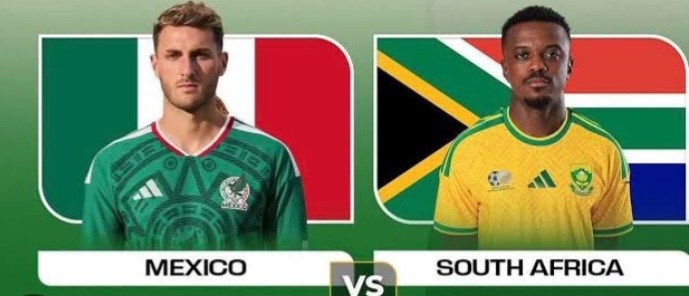
With just 3 days to go, South Africa prepares for a historic opener against co-hosts Mexico at the Estadio Azteca on Thursday, 11 June, 21:00 SAST.
Why Mzansi is Nervous.
The Azteca Cauldron: Nearly 90,000 Mexican fans will create a furnace-like atmosphere. – Shaky Preparations: A dull 0–0 draw vs Nicaragua and a tense 1–1 vs Jamaica raised concerns. – Visa Drama: Travel delays disrupted training schedules. – Injury Setbacks: Thapelo Morena and Mohau Nkota are out; Aubrey Modiba is racing to recover.
Why We Still Believe in them.
The Hugo Broos Factor: Tournament resilience is his trademark. – Lyle Foster’s Form: Scored against Jamaica, proving he can deliver under pressure. – Expanded Format: With 48 teams, even third-placed sides can advance to the Round of 32.
The National Mood.
South Africans are torn between patriotic joy and nail-biting anxiety. Jerseys are selling out, fan parks are buzzing, and the country is bracing for a night of unity.
Trusting Bafana Bafana has always been complicated—they are unpredictable, capable of brilliance and heartbreak in equal measure. But support in Mzansi is not about logic; it’s about love.
On Thursday night, when the whistle blows, the entire nation will pause, united in hope.
Siyanda Ngqayimbana A.K.A. Da blaq Bull: From the Streets of Makhaza to Global Hip Hop Recognition
Siyanda Ngqayimbana, also known as Da blaq Bull, is an emerging hip-hop sensation whose journey from the vibrant streets of Makhaza to the global music stage is capturing hearts and turning heads. Born and raised in the heart of 37sec Ghost Town, Siyanda’s narrative is a testament to the power of passion, dedication, and the pursuit of one’s dreams.
Siyanda’s love affair with rap began in 2014 while growing up in Site B, Khayelitsha. At the time, he was not yet recording his tracks, instead opting to express his lyrical prowess through freestyle videos captured on his phone. It wasn’t until he moved back to Makhaza in 2017 that Siyanda’s latent passion for music found fertile ground. In an environment where his friends weren’t particularly attuned to the hip-hop genre, Siyanda’s determination to create music was unyielding. He remained focused on his studies until the call of the craft could no longer be ignored.
A turning point came in Grade 10 when Siyanda’s ardor for writing and rapping was rekindled. A chance Facebook post seeking a studio in Makhaza led him to an encounter with fellow recording artist Nasy C Alta. This meeting marked the inception of Siyanda’s professional music journey. Under Nasy C Alta’s guidance, Siyanda recorded his first track, “Bombay,” produced by SO Deno which rapidly gained viral traction within his community. The track’s success not only established Siyanda as a force to be reckoned with but also ignited a fervor for musical expression that couldn’t be contained.
Siyanda’s trajectory skyrocketed when he collaborated with fellow Cape Town artists Mossi l Bay and Cynth Kid on “Ithongo Lemambs,” a collaboration that etched his name into the very fabric of Cape Town’s hip-hop scene. His international footprint expanded further with the release of “War Ready,” a collaboration with American artist Mizzy Hendrix . This transcontinental collaboration was a testament to Siyanda’s cross-cultural appeal, capturing the attention of listeners across digital platforms.
However, the journey was not without its obstacles. As the studio where he had been recording closed its doors, Siyanda’s musical momentum came to a temporary halt. But in 2023, a stroke of luck revitalized his journey. With the support of a neighbor who happened to be a recording artist armed with a laptop, Siyanda produced his latest track, “Testimony.” A song initially written in 2022, “Testimony” encapsulates Siyanda’s resilience and his unrelenting spirit to keep creating despite the odds.
Mark your calendars for September 20th as Siyanda Da Bull drops “Testimony” across all digital platforms. The release promises to be a testament not only to his growth as an artist but also to his dedication to his craft.
Siyanda Da Bull also has thrilling collaborations on the horizon. With a forthcoming track featuring the talented American artist Moonraq, alongside Mizzy Hedrix, Siyanda’s influence is poised to transcend borders. Furthermore, a collaboration with Rap God and kill Kris’s , another exceptional American artist, is also in the works, promising a musical experience that bridges continents.
Siyanda Da Bull Ngqayimbana’s journey is an ode to the resilience and passion of Africa’s rising hip-hop stars. His relentless drive and unwavering belief in his artistry continue to shape his path to greatness. As Siyanda continues to amplify his presence on the global music stage, he remains an inspiration to aspiring artists across the world.