
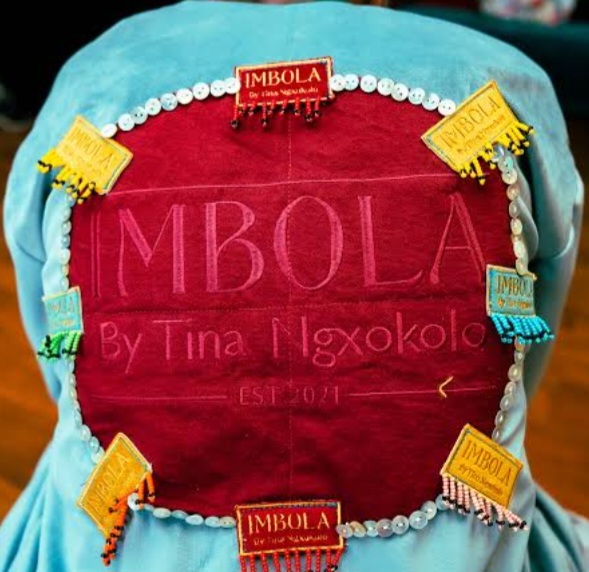
In a studio tucked away on 160 Eloff Street, Village Deep, a quiet revolution in fashion is unfolding. It is here that designer Thina Ngxokolo, older sister to MaXhosa founder Laduma Ngxokolo, has built a sanctuary for heritage, cloth, and craft. Her brand, Imbola, is more than luxury ready-to-wear — it is a living archive of Xhosa identity, reimagined for the modern world.
The Name: Imbola.
In isiXhosa, imbola refers to the sacred red ochre — burnt, pounded, and mixed into a paste worn on the skin. This pigment, traced back 75,000 years to Blombos Cave, is among humanity’s earliest forms of adornment. For Ngxokolo, it is a metaphor for beginnings, memory, and belonging. “We carry that lineage into cloth,” she explains. “Adornment is not vanity — it is pride, it is history, it is us.”
Imbola’s philosophy is simple yet profound: heritage made wearable. Every garment is a bridge between past and present, a conversation between ancestors and contemporary voices.
The Maker: Thina Ngxokolo.
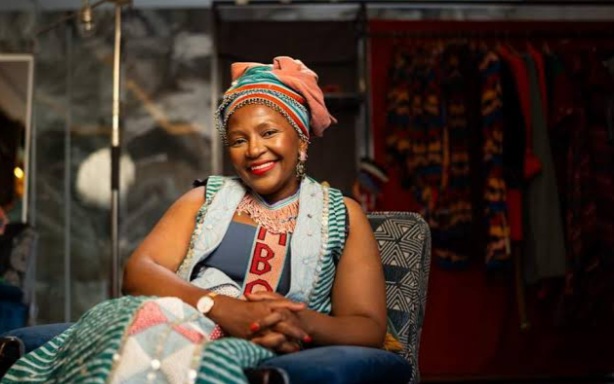
Raised in the traditions of the amaXhosa, Ngxokolo grew up surrounded by ceremonial cloths, beadwork, and the rituals that define identity. For her, fashion is not merely self-expression but a vessel of continuity. “I wanted to create something that speaks to our ceremonies, our milestones, but also our everyday lives,” she says. “Heritage should not be locked away in museums — it should be lived.”
Her vision has resonated across South Africa’s fashion landscape, positioning Imbola as a brand that balances reverence with reinvention. While her brother Laduma’s MaXhosa has become a global symbol of knitwear innovation, Thina’s Imbola focuses on structural silhouettes, handcrafted detail, and ceremonial textiles.
The Cloth: Mbhaco & Iskhakha.
At the heart of Imbola’s collections are Mbhaco and Iskhakha — ceremonial fabrics traditionally worn by the amaXhosa. Heavy cotton, naturally dyed, and hand-finished, these textiles carry centuries of meaning. Ngxokolo reimagines them in modern silhouettes: double-breasted dresses, wrap skirts, tailored jackets adorned with ostrich feathers, and crop tops that fuse tradition with playfulness.
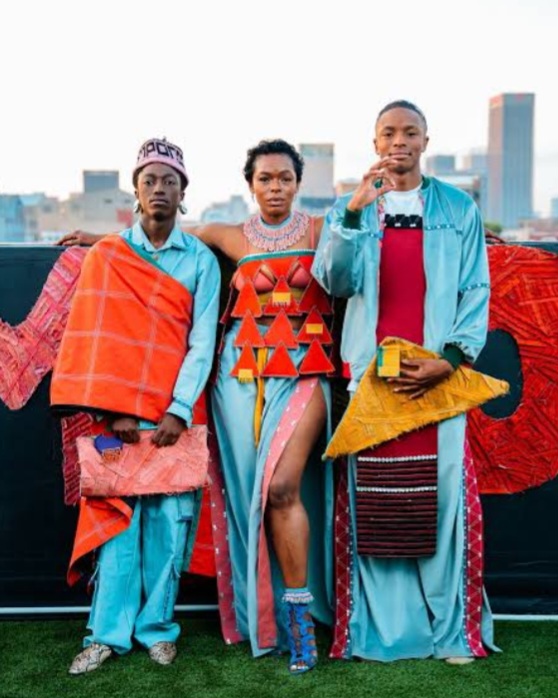
Each garment honours the artistry of the women who wove before us. “Mbhaco is not just fabric,” Ngxokolo insists. “It is memory stitched into every thread.”
Dressed for the Occasion.
Imbola’s catalogue is structured around the life of the amaXhosa — from weddings to everyday wear:
– Umtshato (Wedding): Full regalia for marriage ceremonies, where heritage is most celebrated. – Umgidi (Celebration): Joyful attire for milestones and rites of passage. – Amabhaso (Lobola gifts): Garments that honour the union of families. – Imihla ngemihla (Everyday): Heritage woven into daily life, proving tradition is not confined to special occasions.
This framework ensures that Imbola is not just fashion but a cultural companion, dressing people for every chapter of life.
The Studio.
Inside Imbola’s Johannesburg studio, every piece is meticulously handcrafted. The space hums with the rhythm of sewing machines, the scent of dyed cotton, and the quiet concentration of artisans. It is here that Ngxokolo’s philosophy comes alive: craftsmanship as storytelling.
Critics have praised Imbola for its intentional detail and high-end texture. Features on SABC’s Top Billing have spotlighted the brand’s fusion of heritage and luxury, positioning it as a leader in South Africa’s fashion renaissance.
Signature Pieces.
Among Imbola’s standout creations are:
Orange ‘Skhakha’ Double Breasted Mbhaco Dress (R12,000) – Orange Mbhaco Dress (R12,500) – S’khakha Wrap Skirt (R8,000) – Bhibhi Vest (R5,500) – Tailored Turquoise Jacket with Ostrich Feathers (R6,500) – Multi-Colour Crop Top (R3,000) – Balloon Pants (R3,200) – Signature Bucket Hat (R1,600) — available in denim, sequins, and geometric prints. – ‘Nxili’ Round Shaped Bag (R1,250)
Each item is more than clothing — it is a statement of identity, a wearable archive of Xhosa heritage.
Everyday Heritage.
Imbola’s branding philosophy, Everyday Heritage, is about transforming ceremonial styles into contemporary silhouettes. Heavy cotton fabrics are fused with delicate imported textiles, while ostrich feathers add luxury to traditional cuts. The result is a collection that feels both timeless and modern — garments that can move seamlessly from cultural ceremonies to cosmopolitan streets.
A Global Voice.
Though rooted in Johannesburg, Imbola’s voice is global. Ngxokolo’s work speaks to a universal longing for identity in a world of fast fashion. By grounding her designs in heritage, she offers something rare: authenticity. “Fashion should not erase where we come from,” she says. “It should remind us.
Her brand has begun to attract international attention, with critics noting its potential to stand alongside Africa’s most celebrated labels. Yet Ngxokolo remains grounded, insisting that her mission is first to serve her community. “If our people feel proud wearing Imbola, then I have succeeded.
A Cultural Milestone.
The rise of Imbola marks a cultural milestone in South African fashion. It is part of a broader movement where designers reclaim indigenous textiles, rituals, and aesthetics, positioning them at the centre of luxury. In doing so, Ngxokolo challenges the notion that heritage is static. Instead, she proves it is dynamic, adaptable, and endlessly inspiring.Her work also highlights the role of women in sustaining cultural memory. By honouring the artistry of Xhosa weavers, she situates Imbola within a lineage of female creativity, ensuring their contributions are not forgotten.
Voices of Celebration.
Industry leaders have lauded Ngxokolo’s vision. Fashion critics describe Imbola as “a masterclass in cultural storytelling,” while community members see it as a source of pride. “When I wear Imbola, I feel connected to my grandmother,” one client shared. “It is more than fashion — it is family.
Congratulations to Thina Ngxokolo.
Today, as Imbola continues to grow, we celebrate Thina Ngxokolo not only as a designer but as a custodian of heritage. Her work reminds us that fashion can be more than fabric — it can be memory, identity, and pride stitched into every seam.In a world often dominated by fleeting trends, Imbola stands as a beacon of permanence. It tells us that heritage is not behind us but within us, ready to be worn, lived, and celebrated.
About The Author