

Kappa South Africa: Italian Sportswear Legacy Meets Local Football Culture.
July 2026 Born in Turin, Italy, in 1967, Kappa has grown from a small Italian sportswear experiment into one of the most recognizable global fashion and athletic brands. With its iconic “Omini” logo and slimline designs, Kappa has become synonymous with both performance and streetwear culture. Today, the brand’s South African division is thriving, blending Italian heritage with local football passion and contemporary fashion trends.
Origins of an Italian Icon.
The roots of Kappa stretch back to 1916, when Abramo Vitale founded Maglificio Calzificio Torinese (MCT), a sock and underwear company in Turin. A manufacturing error in 1956 led to the company stamping its products with a “K” for Kontrolle (German for “control”), marking the beginning of a new identity. By 1967, the “K” line was officially trademarked as Kappa, named after the Greek letter, and the brand began its journey into sportswear.
In 1978, Kappa formalized its dedicated athletic division, producing technical apparel for football, fencing, sailing, and other sports. Over the decades, Kappa became a pioneer in sponsorship, famously being one of the first brands to place its logo directly on professional football kits. Clubs like Juventus, AC Milan, and FC Barcelona wore Kappa designs, cementing the brand’s reputation as a trailblazer in sports fashion.
The Omini Logo: Equality in Design.
Perhaps no symbol is more recognizable than Kappa’s “Omini” logo. Created accidentally during a 1969 photoshoot, the logo depicts a man and woman sitting back-to-back. It represents equality, mutual support, and fairness between genders—values that remain central to Kappa’s philosophy. This emblem has become more than just branding; it is a cultural statement about inclusivity in both sports and everyday life.
Global Reach and Ownership.
Kappa is owned by BasicNet S.p.A., a publicly traded Italian company headquartered in Turin. Entrepreneur Marco Boglione revived the brand in 1994 after financial struggles, steering it back to global prominence. Today, BasicNet operates a licensing model, managing brands like K-Way, Superga, and Sebago alongside Kappa. Regional licensees handle distribution, with Kappa South Africa managing local retail and partnerships.
Present in over 130 countries, Kappa continues to merge Italian technology with non-conformist design, empowering athletes and style enthusiasts alike.
Kappa South Africa: Blending Heritage and Streetwear.
In South Africa, Kappa has carved out a unique identity. Known for its Banda tracksuits—featuring repetitive logo taping down sleeves and legs—the brand has become a staple in both football culture and street fashion. Its collections range from technical performance gear to lifestyle sneakers and graphic tees, often priced accessibly for local consumers.
Where to Shop- Official Online Store: Full lifestyle and performance collections. – Retail Partners: Available via Bash (TFG’s online platform), Mr Price Sport, and Studio 88. – Pricing: Sneakers, slides, and tees often retail between R199.00 and R299.00 on clearance, while premium jerseys reach R1,299.99.
Football Heritage in South Africa.
Kappa’s strongest cultural footprint in South Africa lies in football. The brand has long been associated with iconic moments in the nation’s sporting history.
– Kaizer Chiefs Partnership: Kappa is the official technical kit sponsor for Kaizer Chiefs, South Africa’s most decorated football club. The 2026/27 Kombat jerseys, available at Studio 88, retail for R1,299.99 and feature bold designs inspired by Zulu heritage and past club triumphs. – Bafana Bafana Nostalgia: Kappa reissued the legendary 1996 Bafana Bafana home jersey, celebrating South Africa’s historic Africa Cup of Nations victory. This limited-edition release tapped into national pride and nostalgia.

Kaizer Chiefs: The Glamour Boys.
Founded on 7 January 1970 by Kaizer Motaung, Kaizer Chiefs—popularly known as Amakhosi or the Phefeni Glamour Boys—are a cornerstone of South African football. Based in Naturena, Johannesburg, the club plays home fixtures at the iconic FNB Stadium, with a capacity of 94,797, and occasionally at Moses Mabhida Stadium in Durban. Their rivalry with Orlando Pirates in the Soweto Derby remains one of the most anticipated fixtures in African football.
Under head coach Fernando Da Cruz, Chiefs enter the 2026/27 season with renewed ambition, bolstered by new signings like forward Khanyisa Mayo. The team recently lifted the Toyota Cup, with young talent Mfundo Vilakazi scoring the decisive goal against Zimbabwe’s Scottland FC.
The Modern Kappa Partnership.
The reunion between Kaizer Chiefs and Kappa is more than a sponsorship—it is a cultural revival. The two brands first collaborated in the 1980s and 1990s, a period remembered fondly by fans. Their renewed partnership brings together heritage and modern design.
2026/27 Official Kits- Home Jersey: Classic gold base with subtle Zulu shield patterns, sleek black pinstripes, and a structured collar. – Away Jersey: Matte black with a striking gold and grey zigzag “V” pattern, inspired by a lion’s mane and past iconic seasons. Available in short-sleeve and winter long-sleeve variants.
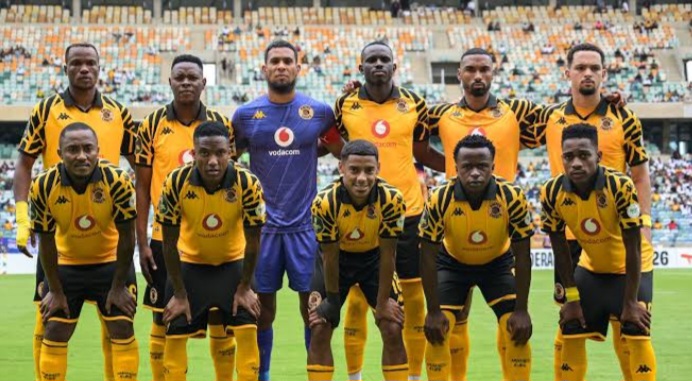
These kits are not just sportswear—they are fashion statements, blending tradition with contemporary aesthetics.
Streetwear and Global Influence.
Beyond football, Kappa has become a leader in global streetwear. In the 1980s, it was embraced by the British “football casuals” subculture, later exploding in the 1990s as a hip-hop fashion staple. The Banda tracksuit became a symbol of retro-sportswear luxury, influencing generations of style enthusiasts.
In recent years, Kappa has spearheaded the “Blokecore” movement, transforming football jerseys into high-fashion pieces. Collaborations with clubs like Venezia FC and Athens Kallithea have blurred the lines between sports kits and runway fashion.
Technical Innovation and Everyday Style.
Kappa’s collections balance performance and lifestyle. – Authentic & Banda: Retro track jackets and matching sets. – Technical Performance: Engineered jackets, joggers, and training gear. – Footwear & Essentials: Everyday sneakers, slides, and branded tees.
This versatility allows Kappa to appeal to both athletes and fashion-conscious consumers, reinforcing its dual identity as a sportswear and streetwear powerhouse.
Brand Impact and Cultural Significance.
Kappa’s influence extends far beyond apparel. – Sponsorship Pioneers: Revolutionized kit design by placing logos on jerseys. – Gender Representation: The Omini logo remains a powerful symbol of equality. – Streetwear Legacy: Defined retro-sportswear aesthetics globally. – Fashion & Football Fusion: Elevated football kits into high-fashion statements.
In South Africa, Kappa’s impact is deeply tied to football culture, nostalgia, and the blending of heritage with modern style.

As Kappa South Africa continues to expand, the brand’s focus remains on empowering individuals to embrace their active spirit with confidence and flair. With Kaizer Chiefs leading the charge in the 2026/27 season, and with streetwear trends keeping Kappa at the forefront of fashion, the brand’s legacy is secure.
From Turin to Johannesburg, Kappa’s journey reflects more than just sportswear—it is a story of resilience, innovation, and cultural connection. In South Africa, that story is still being written, one jersey, one tracksuit, and one victory at a time.
About The Author