

Cape Town has always been a city of contrasts — ocean and mountain, jazz spilling from cafés, gqom thundering from taxis, gospel choirs echoing through churches, and deep house basslines shaking the clubs.
Into this sonic landscape steps Lance “Buzz” Kieswetter, a pianist, composer, and music therapist whose project Umoya is redefining what it means to breathe music.
“Umoya” is a Zulu and Xhosa word meaning breath, wind, spirit — the invisible force that moves through all living things. For Kieswetter, it is not just a title but a philosophy: music as companionship, as presence, as a living dialogue between performer, audience, and ancestors. His concerts are improvised, unrehearsed, and unrepeatable — each one shaped by the room, the crowd, and the moment.
Buzz is not simply playing at people; he is reading the nervous system of the room. Silence, tempo, phrasing — all become tools of healing, regulation, and release. His background in music therapy, studied abroad in Edinburgh and Bristol, informs every note. Yet Cape Town remains the heartbeat of his sound, grounding him in a city where beauty and struggle coexist in every breath.
GTRIBE MAGAZINE ENTERVIEW: BUZZ ON UMOYA.
Q1: What is Umoya in one sentence? Buzz: “Umoya is breath, wind, spirit — the invisible force that moves through all living things, carried in music from Bach to deep house.”
Q2: How does improvisation make each concert unique? Buzz: “Every room breathes different. I listen to the crowd, the space, the moment, then let the music answer back — so no two shows are ever the same.”
Q3: You blend Bach, gospel, deep house, and jazz — which influence surprises audiences most?
Buzz: “Bach in a deep house set. People expect the 4/4 beat, not a 300-year-old fugue dropping into the bassline. Then they realise it’s the same math, different century.”
Q4: Why is ‘breath’ such a central theme in your music?
Buzz: “Breath = umoya = spirit. In Bantu culture, umoya isn’t just air — it’s the life force that connects the living to the ancestors. It’s the first thing we do when we’re born and the last when we go. If I can make people aware of their breathing, I can make them present — and in that presence, something older than all of us is already there.”
Q5: What do you want people to feel when they leave your performance?
Buzz: “Lighter. Like they exhaled something heavy and inhaled something hopeful.”
Q6: How does your background in music therapy shape your concerts?
Buzz: “I’m not just playing at people. I’m reading the room’s nervous system. Tempo, key, silence — all tools to regulate, release, and restore.”
Q7: How does Cape Town remain at the heart of your sound?
Buzz: “Cape Town gave me the weather. Table Mountain over one shoulder, ocean at your feet, and on the same street you’ll hear jazz, gqom, gospel, and house. That tension — beauty + struggle, ancient + future — is the air I breathe when I make music.”
Q8: What’s the biggest misconception about improvisation?
Buzz: “That it’s random. Improvisation is freedom built on discipline. You master the language first, then you’re free to speak.”
Q9: If you had to describe Umoya in three words? Buzz: “Breathe. Belonging. Becoming.”
Q10:What’s next for Buzz after Cape Town? Buzz: “Taking Umoya global again — but slower and deeper.
Collaborations with Cape Flats vocalists, sets in old churches and community halls, not just clubs. In 2027, I plan to take Umoya to the Edinburgh Fringe Festival — bringing this deeply South African sound into one of the world’s great stages for adventurous performance.”
HEALING THROUGH SOUND.
Buzz’s concerts are not spectacles but rituals. Silence is as important as sound, and improvisation becomes a communal act of witness. Audiences leave lighter, as if they’ve exhaled grief and inhaled hope. His work is part of a broader movement to decolonise music therapy, to root healing in African traditions while engaging global audiences.
From the New Apostolic Church hymns of his childhood to the jazz DNA of Abdullah Ibrahim and Nduduzo Makhathini, Buzz carries forward a lineage of listening, companionship, and improvisation. His brother Matheu was his first teacher in musical presence, and that ethos remains in every performance: music as relationship, not product.
THE ROAD AHEAD.
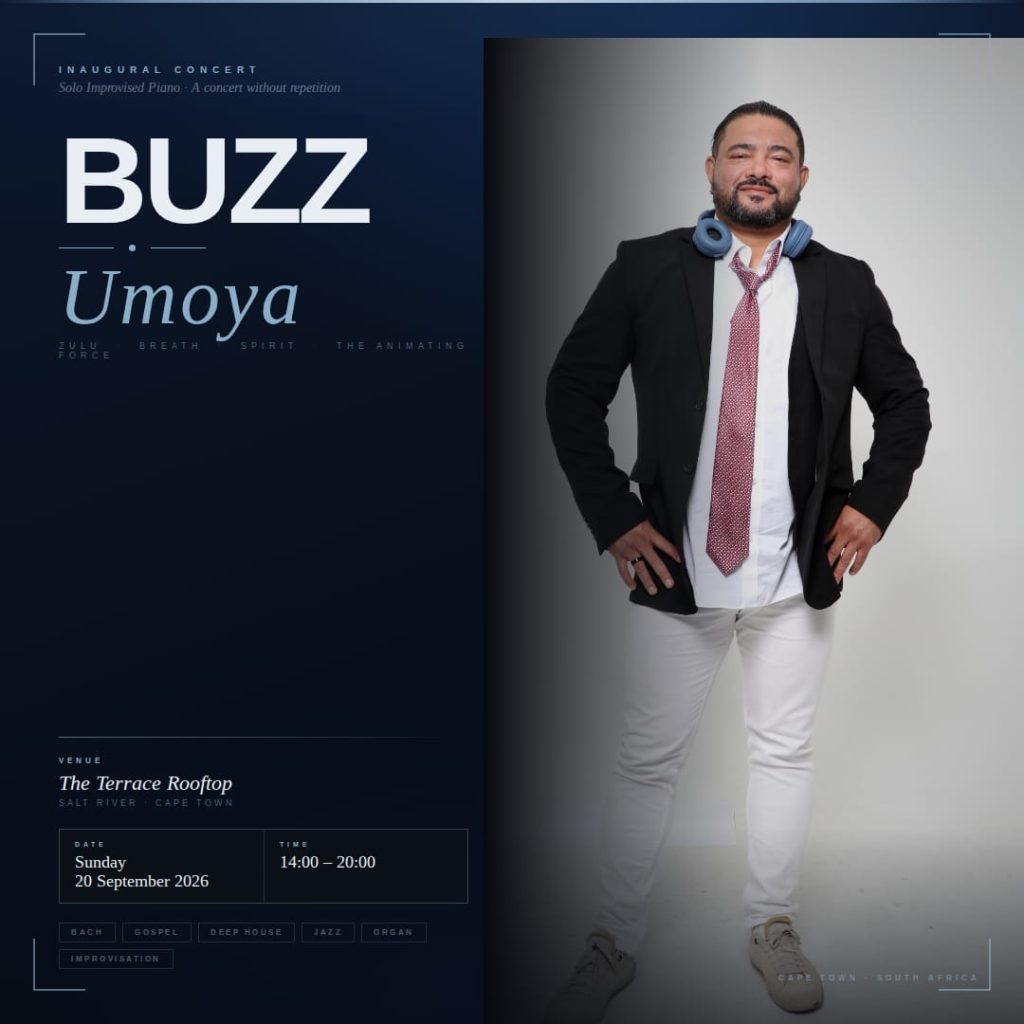
Buzz’s first two Cape Town concerts in September and October will set the stage for his next chapter. St. George’s Cathedral, with its spiritual acoustics, is already on his radar for a lunchtime concert series. Beyond that, the Edinburgh Fringe Festival beckons — a chance to carry Umoya into the global conversation, not as entertainment but as breath made audible.
About The Author